Aristotles Poetics
I posted a link to read the entire thing but I just decided to post a few of his important peices.
I propose to treat of poetry in itself and of its various kinds, noting the essential quality of each, to inquire into the structure of the plot as requisite to a good poem; into the number and nature of the parts of which a poem is composed; and similarly into whatever else falls within the same inquiry. Following, then, the order of nature, let us begin with the principles which come first.
Epic poetry and tragedy, comedy also and dithyrambic poetry, and the music of the flute and of the lyre in most of their forms, are all in their general conception modes of imitation. They differ, however, from one another in three respects - the medium, the objects, the manner or mode of imitation, being in each case distinct.
The differences between man and animals is imagination.
All the elements of an epic poem are found in tragedy, but the elements of a tragedy are not all found in the epic poem.
Tragedy, then, is an imitation of an action that is serious, complete, and of a certain magnitude; in language embellished with each kind of artistic ornament, the several kinds being found in separate parts of the play; in the form of action, not of narrative; through pity and fear effecting the proper purgation of these emotions.
Tuesday, December 9, 2008

Philip Sidney
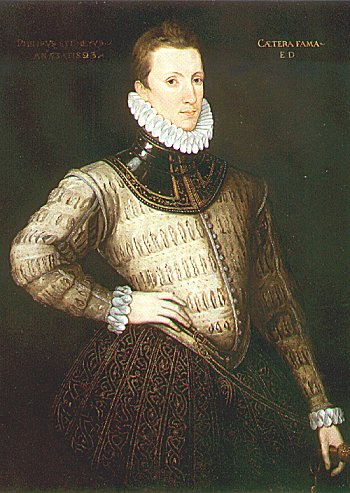
Philip Sidney
The essence of his defense is that poetry, by combining the liveliness of history with the ethical focus of philosophy, is more effective than either history or philosophy in rousing its readers to virtue.
“is no art delivered to mankind that hath not the works of nature for his principal object” (Leitch, Sidney 330). The poet then does not depart from external nature. His works are "imitation" or "fiction," made of the materials of nature, and are shaped by the artist's vision. This vision is one that demands the reader's awareness of the art of imitation created through the "maker," the poet (Kimbrough 45). Sidney's notion of "fore-conceit" means that a conception of the work must exist in the poet's mind before it is written (Harvey 3). Free from the limitations of nature, and independent from nature, poetry is capable of "making things either better than Nature bringeth forth, or, quite anew, forms such as never were in Nature"
The essence of his defense is that poetry, by combining the liveliness of history with the ethical focus of philosophy, is more effective than either history or philosophy in rousing its readers to virtue.
“is no art delivered to mankind that hath not the works of nature for his principal object” (Leitch, Sidney 330). The poet then does not depart from external nature. His works are "imitation" or "fiction," made of the materials of nature, and are shaped by the artist's vision. This vision is one that demands the reader's awareness of the art of imitation created through the "maker," the poet (Kimbrough 45). Sidney's notion of "fore-conceit" means that a conception of the work must exist in the poet's mind before it is written (Harvey 3). Free from the limitations of nature, and independent from nature, poetry is capable of "making things either better than Nature bringeth forth, or, quite anew, forms such as never were in Nature"
"For Blake the true aim of art was to tune the senses and the imaginative faculties to the higher pitch of a spiritual reality, not to the natural world."
The other day we were talking about William Blake and children's literature and I decided to look at some of his Poetry he wrote about children. He was such an advocate for rights for children and his Poems Songs of Innocence and Experience. "They are testimony to his acute sensitivity to the realities of poverty and exploitation that accompanied the "dark satanic mills" of the industrial revolution"
The Chimney Sweeper was definitely an example of that.
The Chimney Sweeper William Blake
When my mother died I was very young,
And my father sold me while yet my tongue,
Could scarcely cry weep weep weep weep,
So your chimneys I sweep & in soot I sleep.
Theres little Tom Dacre, who cried when his head
That curled like a lambs back was shav'd, so I said.
Hush Tom never mind it, for when your head's bare,
You know that the soot cannot spoil your white hair
And so he was quiet. & that very night.
As Tom was a sleeping he had such a sight
That thousands of sweepers Dick, Joe, Ned, & Jack
Were all of them lock'd up in coffins of black,
And by came an Angel who had a bright key
And he open'd the coffins & set them all free.
Then down a green plain leaping laughing they run
And wash in a river and shine in the Sun.
Then naked & white, all their bags left behind.
They rise upon clouds, and sport in the wind.
And the Angel told Tom, if he'd be a good boy,
He'd have God for his father & never want joy.
And so Tom awoke and we rose in the dark
And got with our bags & our brushes to work.
Tho' the morning was cold, Tom was happy & warm
So if all do their duty, they need not fear harm.
The other day we were talking about William Blake and children's literature and I decided to look at some of his Poetry he wrote about children. He was such an advocate for rights for children and his Poems Songs of Innocence and Experience. "They are testimony to his acute sensitivity to the realities of poverty and exploitation that accompanied the "dark satanic mills" of the industrial revolution"
The Chimney Sweeper was definitely an example of that.
The Chimney Sweeper William Blake
When my mother died I was very young,
And my father sold me while yet my tongue,
Could scarcely cry weep weep weep weep,
So your chimneys I sweep & in soot I sleep.
Theres little Tom Dacre, who cried when his head
That curled like a lambs back was shav'd, so I said.
Hush Tom never mind it, for when your head's bare,
You know that the soot cannot spoil your white hair
And so he was quiet. & that very night.
As Tom was a sleeping he had such a sight
That thousands of sweepers Dick, Joe, Ned, & Jack
Were all of them lock'd up in coffins of black,
And by came an Angel who had a bright key
And he open'd the coffins & set them all free.
Then down a green plain leaping laughing they run
And wash in a river and shine in the Sun.
Then naked & white, all their bags left behind.
They rise upon clouds, and sport in the wind.
And the Angel told Tom, if he'd be a good boy,
He'd have God for his father & never want joy.
And so Tom awoke and we rose in the dark
And got with our bags & our brushes to work.
Tho' the morning was cold, Tom was happy & warm
So if all do their duty, they need not fear harm.

I met a traveller from an antique land
Who said: "Two vast and trunkless legs of stone
Stand in the desert. Near them on the sand,
Half sunk, a shattered visage lies, whose frown
Half sunk, a shattered visage lies, whose frown
And wrinkled lip and sneer of cold command
Tell that its sculptor well those passions read
Which yet survive, stamped on these lifeless things,
The hand that mocked them and the heart that fed.
And on the pedestal these words appear:
`My name is Ozymandias, King of Kings:
Look on my works, ye mighty, and despair!'
Nothing beside remains. Round the decay
Of that colossal wreck, boundless and bare,
The lone and level sands stretch far away.
I really do like Percy Shelly. I love his poems and I thought his defence for Poetry was great. I remember having to read this when I was in Brit Lit and I think he is the only defence I liked. My favorite line is "A poem is the very image of live expressed in its eternal truth"
This also made me think of The Idea of Order at Key West, where the woman was the maker of the world she sang and Percy says
" There is a difference between a story and a poem, that a story is a catalogue of detached facts, which have no other bond of connexion than time, place, circumstance, cause and effect; the other is the creation of actions according to the unchangeable forms of human nature, as existing in the mind of the creator, which is itself the image of all other minds. The one is partial, and applies only to a definite period of time, and a certain combination of events which can never again recur; the other is universal and contains within itself the germ of a relation to whatever motives or actions have place in the possible varieties of human nature. Time, which destroys the beauty and the use of the story of particular facts, stript of the poetry which should invest them, augments that of Poetry and forever develops new and wonderful applications of the eternal truth which it contains."
This also made me think of The Idea of Order at Key West, where the woman was the maker of the world she sang and Percy says
" There is a difference between a story and a poem, that a story is a catalogue of detached facts, which have no other bond of connexion than time, place, circumstance, cause and effect; the other is the creation of actions according to the unchangeable forms of human nature, as existing in the mind of the creator, which is itself the image of all other minds. The one is partial, and applies only to a definite period of time, and a certain combination of events which can never again recur; the other is universal and contains within itself the germ of a relation to whatever motives or actions have place in the possible varieties of human nature. Time, which destroys the beauty and the use of the story of particular facts, stript of the poetry which should invest them, augments that of Poetry and forever develops new and wonderful applications of the eternal truth which it contains."
Ozymandias
I met a traveller from an antique land
Who said: "Two vast and trunkless legs of stone
Stand in the desert. Near them on the sand,
Half sunk, a shattered visage lies, whose frown
And wrinkled lip and sneer of cold command
Tell that its sculptor well those passions read
Which yet survive, stamped on these lifeless things,
The hand that mocked them and the heart that fed.
And on the pedestal these words appear:
`My name is Ozymandias, King of Kings:
Look on my works, ye mighty, and despair!
'Nothing beside remains. Round the decay
Of that colossal wreck, boundless and bare,
The lone and level sands stretch far away.
I met a traveller from an antique land
Who said: "Two vast and trunkless legs of stone
Stand in the desert. Near them on the sand,
Half sunk, a shattered visage lies, whose frown
And wrinkled lip and sneer of cold command
Tell that its sculptor well those passions read
Which yet survive, stamped on these lifeless things,
The hand that mocked them and the heart that fed.
And on the pedestal these words appear:
`My name is Ozymandias, King of Kings:
Look on my works, ye mighty, and despair!
'Nothing beside remains. Round the decay
Of that colossal wreck, boundless and bare,
The lone and level sands stretch far away.
The best poetry is what we want; the best poetry will be found to have a power of forming, sustaining, and delighting us, as nothing else can.
Everything depends on the reality of a poet’s classic character. If he is a dubious classic, let us sift him; if he is a false classic, let us explode him. But if he is a real classic, if his work belongs to the class of the very best (for this is the true and right meaning of the word classic, classical), then the great thing for us is to feel and enjoy his work as deeply as ever we can, and to appreciate the wide difference between it and all work which has not the same high character. This is what is salutary, this is what is formative; this is the great benefit to be got from the study of poetry. Everything which interferes with it, which hinders it, is injurious. True, we must read our classic with open eyes, and not with eyes blinded with superstition; we must perceive when his work comes short, when it drops out of the class of the very best, and we must rate it, in such cases, at its proper value.
And yet Chaucer is not one of the great classics. His poetry transcends and effaces, easily and without effort, all the romance-poetry of Catholic Christendom; it transcends and effaces all the English poetry contemporary with it, it transcends and effaces all the English poetry subsequent to it down to the age of Elizabeth. Of such avail is poetic truth of substance, in its natural and necessary union with poetic truth of style. And yet, I say, Chaucer is not one of the great classics. He has not their accent. What is wanting to him is suggested by the mere mention of the name of the first great classic of Christendom, the immortal poet who died eighty years before Chaucer,—Dante. The accent of such verse as
‘In la sua volontade è nostra pace…’
Without poetry, our science will appear incomplete; and most of what now passes with us for religion and philosophy will be replaced by poetry”.
I just picked a few key things out from Mathew Arnold's Study of Poetry that I thought were important and down to the point. What I basically got from Arnold is that poetry should be beautiful and be meant to delight us and transcend us. But its damned hard to be a good poet and match his standards. He is pretty picky about who can be counted as one of the classic poets and not even Chaucer can meet them. And eventually everything will be replaced by poetry.
It was really long and kind of drawn out but I thought for the most part it was rather intelligent and even pretty. But I don't think many people could meet his standards.
Everything depends on the reality of a poet’s classic character. If he is a dubious classic, let us sift him; if he is a false classic, let us explode him. But if he is a real classic, if his work belongs to the class of the very best (for this is the true and right meaning of the word classic, classical), then the great thing for us is to feel and enjoy his work as deeply as ever we can, and to appreciate the wide difference between it and all work which has not the same high character. This is what is salutary, this is what is formative; this is the great benefit to be got from the study of poetry. Everything which interferes with it, which hinders it, is injurious. True, we must read our classic with open eyes, and not with eyes blinded with superstition; we must perceive when his work comes short, when it drops out of the class of the very best, and we must rate it, in such cases, at its proper value.
And yet Chaucer is not one of the great classics. His poetry transcends and effaces, easily and without effort, all the romance-poetry of Catholic Christendom; it transcends and effaces all the English poetry contemporary with it, it transcends and effaces all the English poetry subsequent to it down to the age of Elizabeth. Of such avail is poetic truth of substance, in its natural and necessary union with poetic truth of style. And yet, I say, Chaucer is not one of the great classics. He has not their accent. What is wanting to him is suggested by the mere mention of the name of the first great classic of Christendom, the immortal poet who died eighty years before Chaucer,—Dante. The accent of such verse as
‘In la sua volontade è nostra pace…’
Without poetry, our science will appear incomplete; and most of what now passes with us for religion and philosophy will be replaced by poetry”.
I just picked a few key things out from Mathew Arnold's Study of Poetry that I thought were important and down to the point. What I basically got from Arnold is that poetry should be beautiful and be meant to delight us and transcend us. But its damned hard to be a good poet and match his standards. He is pretty picky about who can be counted as one of the classic poets and not even Chaucer can meet them. And eventually everything will be replaced by poetry.
It was really long and kind of drawn out but I thought for the most part it was rather intelligent and even pretty. But I don't think many people could meet his standards.
Monday, December 8, 2008
William Wordsworth
After my research on William Wordsworth I never realized how artistic he was.
Things to remember
1. William felt that Nature was a measure to see if the poets feelings were genuine.
2. He felt that Nature was an inspiration to man and made then better people.
3. Encouraged people to experience nature and use it in their poetry.
4. Felt that poetry should use language used by men.
5. Poetry should be beautiful
Things to remember
1. William felt that Nature was a measure to see if the poets feelings were genuine.
2. He felt that Nature was an inspiration to man and made then better people.
3. Encouraged people to experience nature and use it in their poetry.
4. Felt that poetry should use language used by men.
5. Poetry should be beautiful
Subscribe to:
Posts (Atom)
